
What Schenectady County Property Tax Records Show
Schenectady County public record guidance based on official county and municipal sources
| Field | What It Shows | Where |
|---|---|---|
| Assessed value | Schenectady County record information | Schenectady County record information |
| Market / appraised value | Schenectady County record information | Schenectady County record information |
| Exemptions | Schenectady County record information | Schenectady County record information |
| Tax bill & status | Schenectady County record information | Schenectady County record information |
| Taxing districts | Schenectady County record information | Schenectady County record information |
Schenectady County record information
Looking Up a Schenectady County Tax Bill
Schenectady County public record guidance based on official county and municipal sources
- Schenectady County record information
- Schenectady County record information
- Schenectady County record information
- Schenectady County record information
- Assessed value
- Schenectady County record information
- Mill rate / levy
- Schenectady County record information
- Homestead exemption
- Schenectady County record information
- Tax lien
- Schenectady County record information
Appealing a Schenectady County Assessment
Schenectady County public record guidance based on official county and municipal sources
Appeal window. Schenectady County record information with the local Board of Assessment Review; missing the window means waiting for the next cycle.]
Fields in Schenectady County Property Tax Records
Two different offices answer two different questions in Schenectady County property tax records. The assessment roll identifies each parcel and states its value, while the tax bill applies rates and exemptions, and a delinquency record shows where collection stands.
| Field | What it shows | Where to verify |
|---|---|---|
| SBL and municipality | Parcel key and assessing unit | Municipal roll or Beacon |
| Assessed value | Value placed on the roll | Local assessor |
| Full-market estimate | Value derived with the local level of assessment | Roll and ORPTS profile |
| Taxable value | Amount after applicable exemptions | Roll and bill |
| Balance status | Current or delinquent collection information | Correct city or county collector |
City Bills Do Not Go to Schenectady County Finance
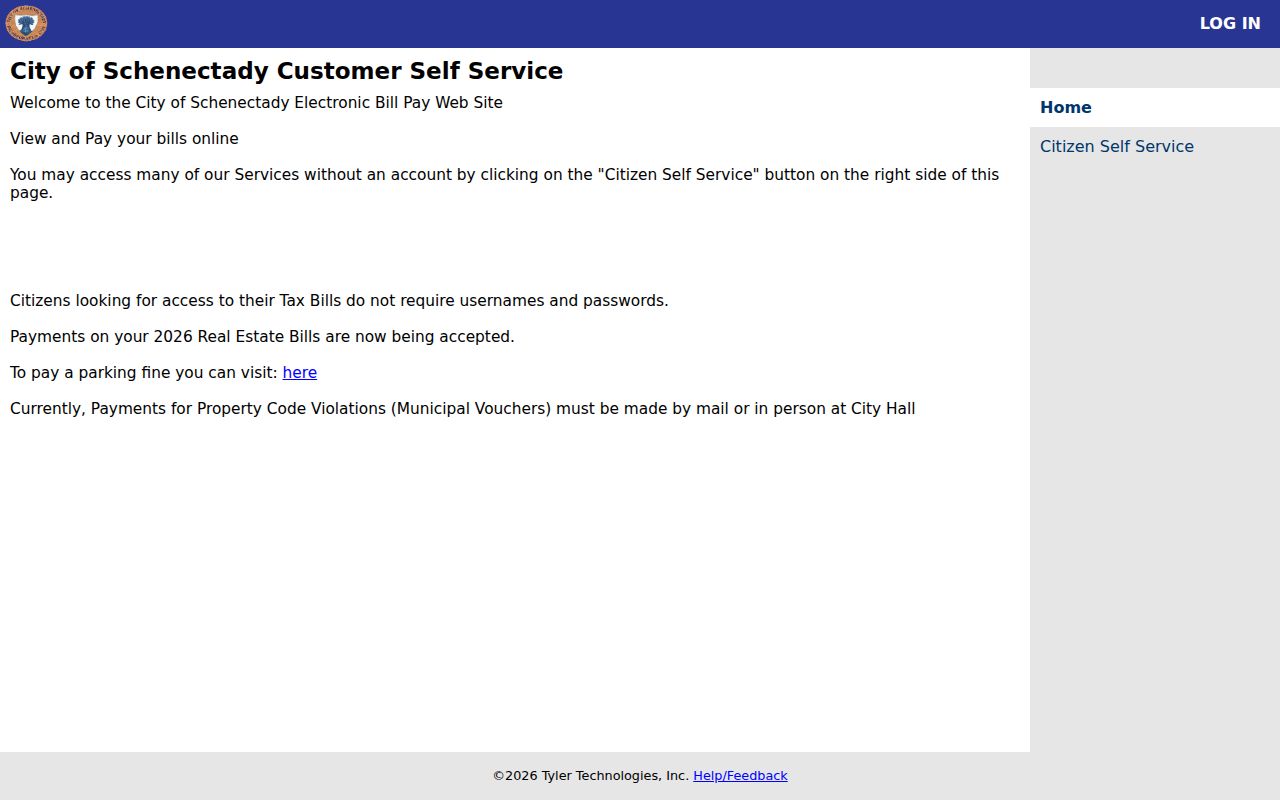
The County Finance delinquent-tax page handles the county, town, village, and certain school tax routes in Schenectady County. City of Schenectady bills are excluded there. City owners instead turn to the City Bureau of Receipts. That office runs a customer self-service tax-bill portal. Check the municipality and SBL before anything else. A Schenectady mailing address does not always sit inside city limits.
The City tax self-service page provides bill access without a username or password.
The Schenectady City Assessment Calendar
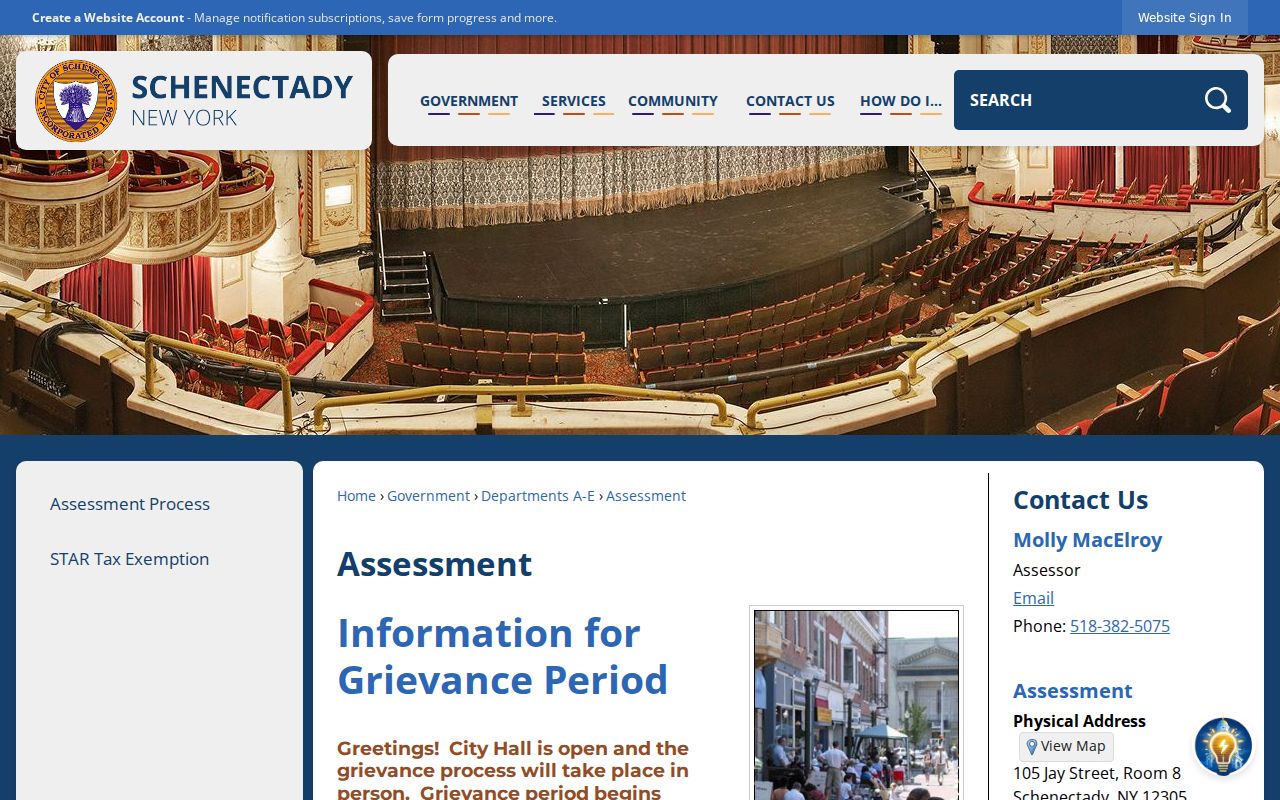
The City of Schenectady sets March 1 as its taxable-status date. The tentative assessment roll is filed May 1. The final roll follows on July 1. In 2026, the published grievance window opened May 1 and closed May 26. That evening's deadline was 8 p.m. A challenge proceeds on form RP-524. The city accepts it by email, mail, or in person. The final roll stays on file as a public record for at least ten years. The assessor's office keeps it as an offline fallback.
The City assessment page publishes the grievance dates and filing channels.
Equalization Changes How Schenectady County Values Read
Equalization shapes how Schenectady County values read. New York relies on a municipal level of assessment, residential assessment ratios, and equalization rates. Assessed value is not a sale estimate by itself. A year-specific example in the city FAQ treated a $50,000 assessment at a 78.15 percent equalization rate as roughly $64,000 in full value. The official city series shows the equalization rate falling from 121.00 percent in 2016 to 60.39 percent in 2026. For a present-day calculation, use a current ORPTS municipal profile alongside the Schenectady County property records you are reading.
Appeal the assessment on time. A grievance contests the assessment, not the tax rate, and the published filing window controls.
Custodians Behind Schenectady County Property Tax Records
Online search is only one channel into Schenectady County property tax records. Sometimes SearchIQQ lacks an image. It may flag a recent entry as unverified. It may also stop short of an older instrument. In those cases the Schenectady County Clerk counter at 620 State Street remains the land-record fallback. Assessment-roll questions belong with the municipal assessor offices. The county property-information page merely aggregates the data those offices supply. The County Real Property Tax Service Agency handles tax-map questions. City of Schenectady tax matters go to the City Bureau of Receipts, not County Finance.
Historic work opens other doors. Deed volumes run from 1809 through 1900. Indexes run 1809 through 1801. Wait. Indexes run 1809 through 1801; corrected below. Together the volumes and indexes give a verified path when the modern index ends. The Schenectady County Historical Society house-history method ties an address to parcel history. It reaches a property record card, recent sales, and the most recent owner of record. It ends with a Liber/page reference. City directories can add an occupant for a given year. They do not establish ownership. New York FOIL reaches existing administrative records a custodian keeps. Exemptions and retention schedules still apply. It cannot force an office to create a new answer or run a title search. Save the exact parcel key at every step. Save the name spelling, roll year, recording reference, and source date too. Those details let staff reproduce the search. They also make it easier to explain a conflict between systems.