
How to Search Schenectady County Property Records
Schenectady County property records live in several offices. This page gathers the county's public-record guidance from official county and municipal sources, so a parcel number can lead you to the right deed record, tax roll, or plat the first time.
- Schenectady County record information
- Schenectady County record information
- Schenectady County record information
- Schenectady County record information
- Schenectady County record information
Schenectady County Property Records Offices
Schenectady County public record guidance based on official county and municipal sources
Schenectady County Recorder / Register of Deeds
620 State Street, 3rd Floor
Schenectady, NY 12305
(518) 388-4220
Schenectady County Assessor / Appraisal District
620 State Street, 3rd Floor
Schenectady, NY 12305
(518) 388-4220
Schenectady County Treasurer / Tax Collector
620 State Street, 3rd Floor
Schenectady, NY 12305
(518) 388-4220
Types of Schenectady County Property Records
Schenectady County public record guidance based on official county and municipal sources
| Record Type | What It Documents | Kept By | Access |
|---|---|---|---|
| Deeds | Schenectady County record information | Schenectady County record information | Schenectady County record information |
| Mortgages & liens | Schenectady County record information | Schenectady County record information | Schenectady County record information |
| Tax & assessment | Schenectady County record information | Schenectady County record information | Schenectady County record information |
| Plats & parcels | Schenectady County record information | Schenectady County record information | Schenectady County record information |
| Building permits | Schenectady County record information | Schenectady County record information | Schenectady County record information |
Schenectady County public record guidance based on official county and municipal sources
What Schenectady County Property Records Can and Cannot Tell You
Schenectady County public record guidance based on official county and municipal sources
Lawful use. Schenectady County public record guidance based on official county and municipal sources
SearchIQS Connects Schenectady County Names to Recorded Land
The County Clerk land-record page points to SearchIQS. Deeds, mortgages, releases, judgments, mechanics' liens, lis pendens, and maps all sit in that index. The free name-and-date search is the best bridge. It carries you from the owner on an assessment card into the recorded title trail. Party 1 and Party 2 separate grantors from grantees. An asterisk wildcard catches punctuation and spelling variants. Results bearing an image carry an asterisk, and a recent filing may show a red date with an unverified-document warning. A public account searches at no charge. Document images cost $1 each, while a monthly account lists them at 50 cents. Save the index result first. The book and page, instrument number, recording date, and related-document links let the clerk reproduce a copy request, so capture them before paying for an image.
| SearchIQS field | Practical use | Local caution |
|---|---|---|
| Party 1 | Search a grantor or releasing party | Try a wildcard for punctuation |
| Party 2 | Search a grantee or receiving party | Entity names may vary |
| Date range | Narrow a known transfer period | Use the required date format |
| Related documents | Follow releases and later filings | Check each instrument independently |
Schenectady County Assessment Records Start with the Municipality
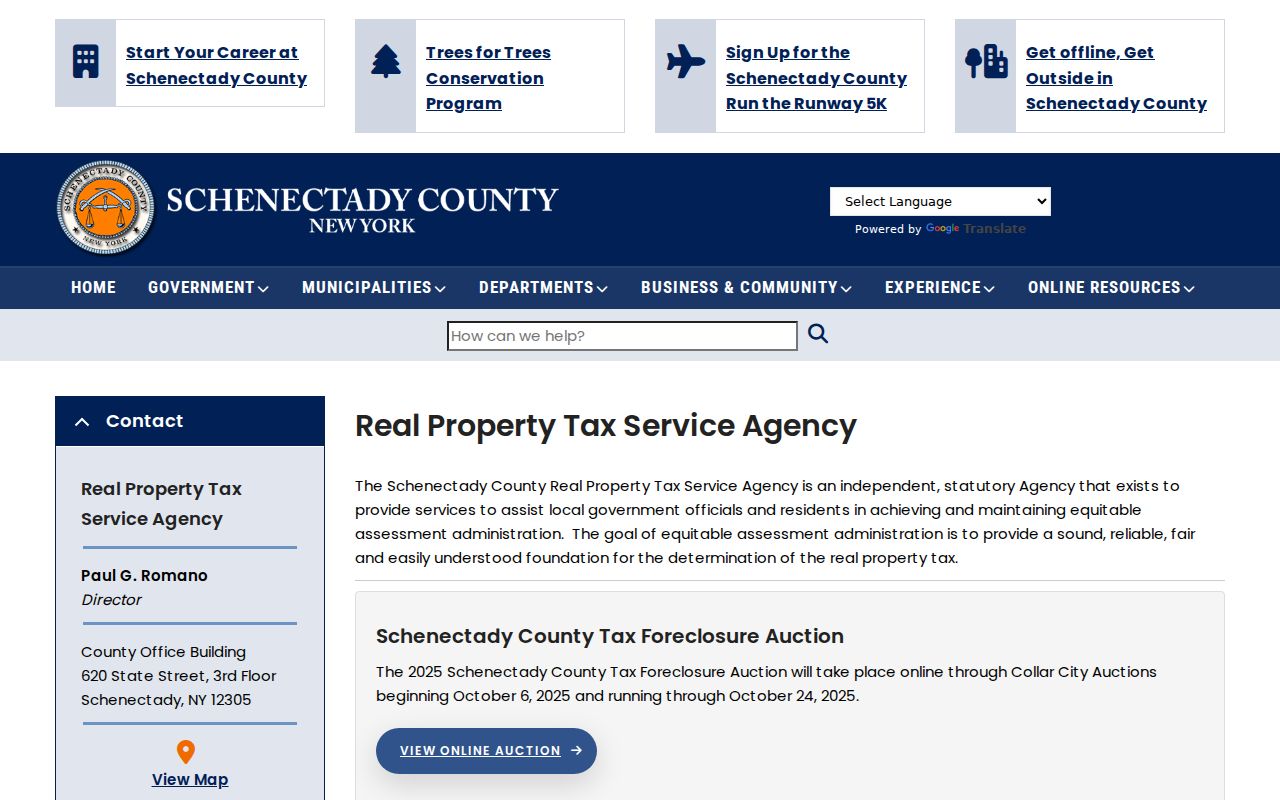
The Real Property Tax Service Agency aggregates Beacon property information, tax maps, assessor links, and roll materials in one county hub. City and town assessors supply the data. A Schenectady mailing address can mislead. Confirm the city, town, or village, the SWIS code, and the SBL print key before comparing owners or values, because the postal name alone does not identify the assessing municipality. The City of Schenectady alone covers about 20,400 parcels. Its tentative roll files on May 1, and the final roll lands on July 1. A property-card legend can list the street number and location, the SBL, property class, building style, year built, condition, bedrooms, baths, fireplaces, living-area square feet, frontage, and depth. Those fields describe the assessment record. They are not a boundary survey. Read the card as the assessor's description, not a present-condition inspection of the property.
The county tax-map and property-information page shows the official route to municipal rolls and Beacon.
SIMS Lite Adds Schenectady County Parcel Context
SIMS Lite provides the map layer for a Schenectady County property search. County GIS backs planning, E-911, elections, public health, agriculture, zoning, aerial photography, and real-property administration. Click a parcel to tie its shape to an SBL. The assessor still holds ownership and value. Computer-drawn parcel lines are reference aids only. When a line matters legally, the recorded deed controls. So does a recorded subdivision map or a licensed survey.
The county planning and GIS description explains the broader public purpose of these map layers.
City and County Tax Routes Divide Schenectady County
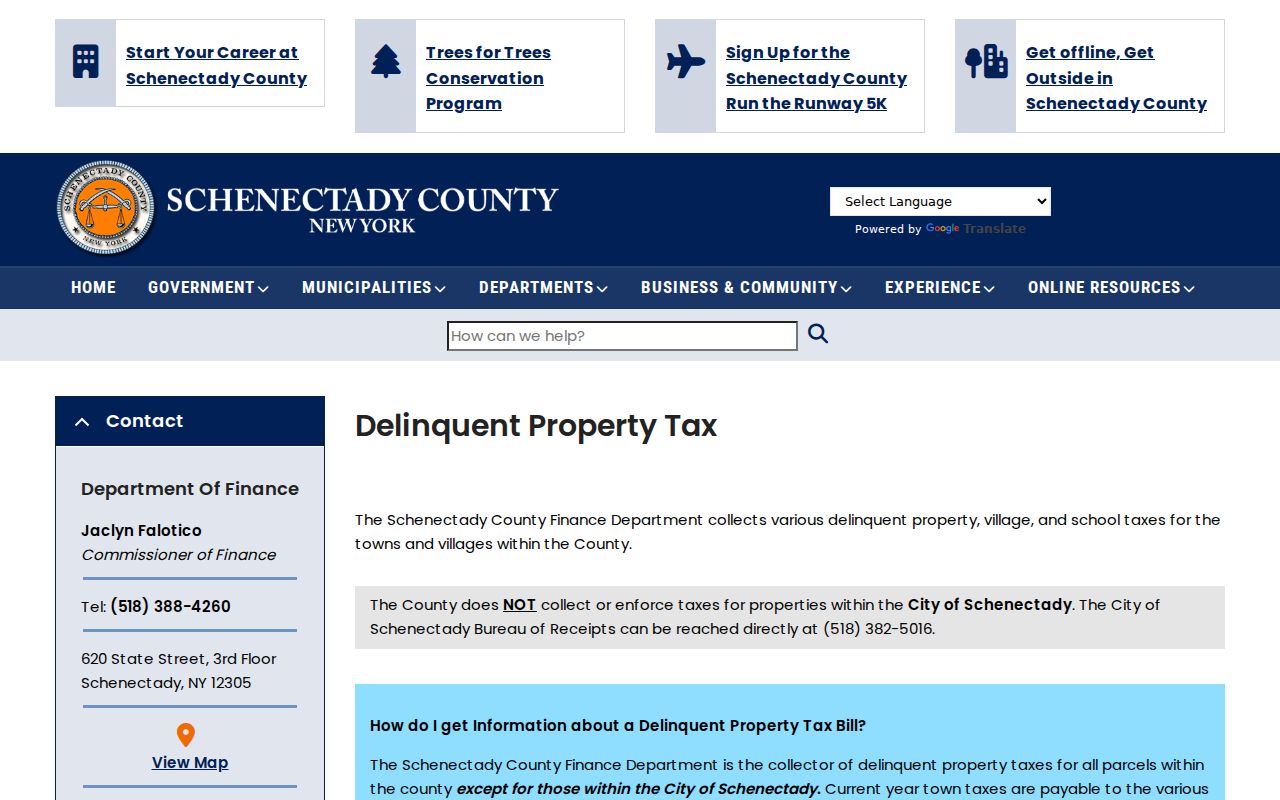
County Finance handles delinquent town, county, village, and certain school taxes. It does not collect City of Schenectady property taxes. City parcels flow through the City Bureau of Receipts and its tax self-service portal instead. The municipality matters more than the postal name. Systems diverge quickly. Current bills, delinquent balances, assessment values, and deed ownership can sit in different systems and carry different dates.
The official delinquent-tax page states the city exclusion and payment route.
Older Schenectady County Deed Books Begin in 1809
The County Clerk landing page publishes no earliest year for the live SearchIQS index. Its reach stays unpublished. Guessing at coverage only invites dead ends. FamilySearch documents Schenectady County deed volumes for 1809 through 1900 and deed indexes for 1809 through 1901. Older chains need a fallback. The clerk counter, the historic deed books, and those cataloged collections supply it when an instrument drops out of the current portal. The Historical Society's house-history method starts at an address, opens parcel history and the property record card, and notes recent sales and the most recent owner. The Liber and page crosses into the deed record.
Record Alert Watches New Schenectady County Filings
County residents can enroll in the Clerk's no-cost Record Alert service through IQS. Former Landex users must enroll again. The alert flags later filings under a registered name. It neither blocks a document nor proves fraud. Treat the notice as a prompt to inspect the instrument and contact the clerk. New York's transfer-on-death deed law, effective July 19, 2024, adds TODD, revocation, and fulfillment notices to the property-index trail.
The official Record Alert page explains signup and the platform change.
Offline and Historic Access to Schenectady County Property Records
Online results are one channel among several. The Schenectady County Clerk counter at 620 State Street remains the land-record fallback. Head there when SearchIQS lacks an image, a recent entry carries an unverified mark, or an older instrument sits outside visible coverage. Assessment-roll questions go to the municipal assessor. The county property-information page only aggregates what those offices supply, so the source office answers best. Tax-map questions route elsewhere. The County Real Property Tax Service Agency takes those. City taxes follow a different path. City of Schenectady bills belong with the City Bureau of Receipts rather than County Finance.
Historic work has a verified path. FamilySearch documents deed volumes from 1809 through 1900 and deed indexes from 1809 through 1901, covering years the modern index stops short. The Schenectady County Historical Society house-history method links an address to parcel history, a property record card, recent sales, the most recent owner, and a Liber and page reference. City directories can add an occupant. They never establish ownership, and FOIL has limits too. New York FOIL reaches existing administrative records a custodian keeps, subject to exemptions and retention, but it cannot force an office to create a new answer or run a title search. Save the exact parcel key and name spelling. Record the roll year, the recording reference, and the source date at every step as well. Those details let county staff reproduce a search and explain a conflict between systems.